


Gas gate valves are designed for the safe isolation of gas supply lines on flanged pipework in commercial and industrial systems.
Installed on incoming supplies, plant rooms and process applications, they provide reliable shut-off where it matters most.
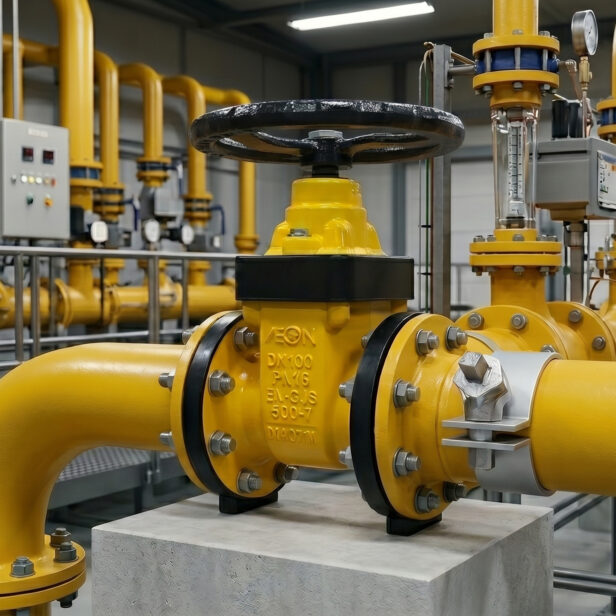
Features and Benefits
Built to meet recognised UK and European standards, our range of industrial gas valves support safe operation, maintenance and compliance across a wide range of environments.
- 7 bar maximum operating pressure for double-block-and-bleed
- BSI Kitemark, CE (PED 97/23/EC) and DVGW compliant
- Two stem seals fully replaceable under pressure
- 250μm FBE internal and external coating
- Lifting eye bolts standard from DN125
- Face to face dimensions to BS 5163 (EN 558-1 Series 3)
- Construction complies to GIS/V7-1 Class A/B, EN13774 Class 1/2
- Bonnet complies to GW 336 (adaptation of extension spindle)

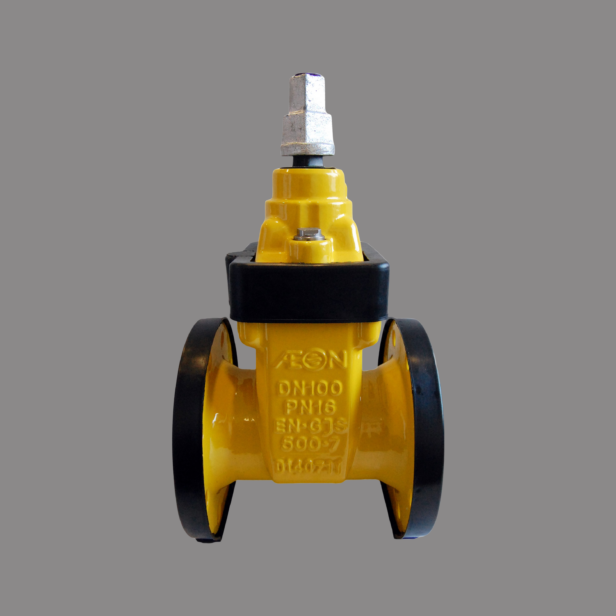
Technical Specification
| Specification | |
| Medium | Natural gas lines |
| Maximum working pressure | PN7 |
| Working temperature range | -20 – 60oC |
| Installation | Vertical or horizontal Above or below ground |
| Connections | Flange type to EN 1092-2 PN16 |
| Operation | Cap top (Handwheel supplied loose for site fitting where required) |


Frequently Asked Questions
An industrial gas gate valve is used to isolate gas flow in commercial and industrial pipework systems. It is typically installed on flanged pipework, including incoming gas supplies, plant rooms and process lines, where full shut-off is required for safety, maintenance or emergency isolation.
Yes, a gas gate valve can be used within a double block and bleed setup when it meets the required pressure rating and specification. Valves rated up to 7bar are commonly used in applications where secure isolation and pressure verification are essential.
A gas isolation valve should comply with recognised UK and European standards such as BSI Kitemark, CE marking under the Pressure Equipment Directive and DVGW approval. Additional compliance with GIS/V7-1 and EN 13774 helps ensure suitability for gas distribution and industrial use.
Fusion bonded epoxy (FBE) coating provides long-term corrosion protection for both internal and external valve surfaces. This is particularly important for flanged pipework installations where durability, reliability and reduced maintenance are key requirements.
Choosing the right industrial gas valve depends on pipe size, pressure rating, flange specification and installation environment. Features such as replaceable stem seals, standardised face-to-face dimensions (BS 5163 / EN 558-1 Series 3) and compatibility with extension spindles can also support easier installation and long-term performance.
A gas gate valve and a gas ball valve are both used for isolating gas flow, but they operate differently and suit different applications.
A gate valve uses a sliding gate that lifts fully out of the flow path, making it ideal for flanged pipework and larger pipe sizes where minimal pressure drop is important.
A ball valve uses a rotating ball with a bore through it, offering quicker operation and a more compact design, which can be better suited to smaller systems or where frequent operation is required.
The choice depends on system design, operating conditions and how the valve will be used in practice.